Minecraft Medieval Schematics Expand With Bridges, Castles, and Village Guides
Builders are sharing new layer-by-layer blueprints for medieval houses, riverside bridges, and fortifications across Java and Bedrock.
 9Minecraft Team
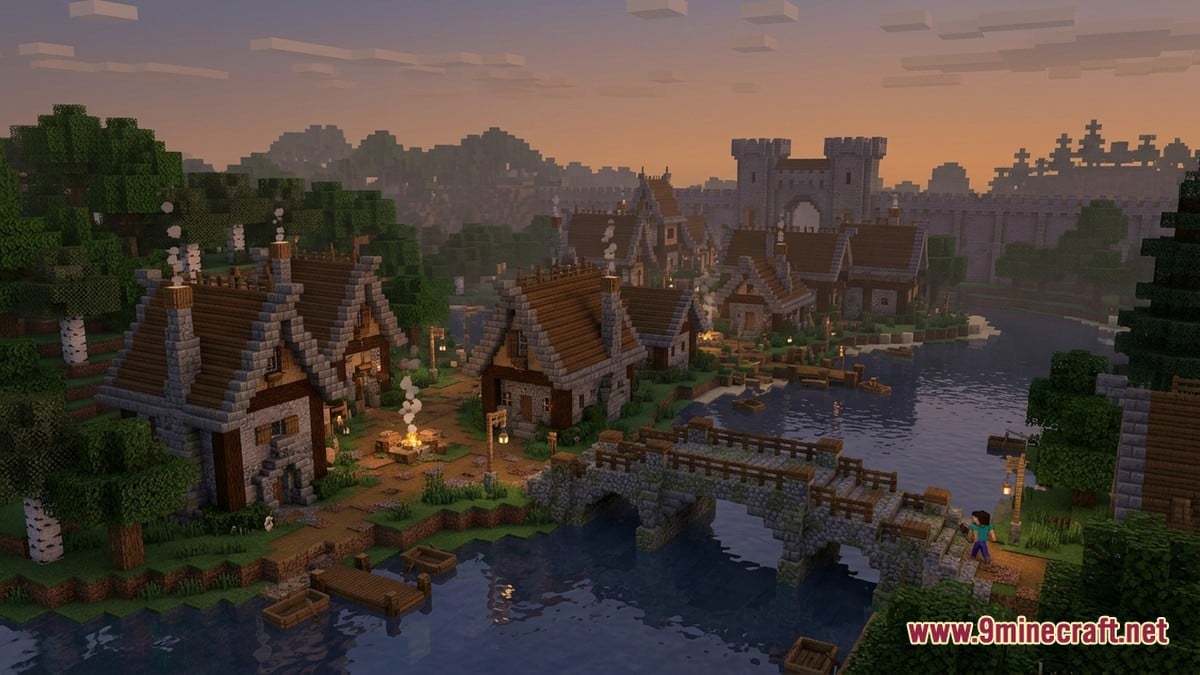
Medieval architecture remains the most popular building style in Minecraft, and schematic platforms have expanded their libraries with layer-by-layer blueprints for survival villages, stone bridges, and sprawling fortresses. According to Shulkr, the style works so well because small projects naturally grow into larger settlements: a single cottage or tavern turns into a hamlet, which eventually requires perimeter walls, a gatehouse, and a central keep.
Because those larger fortifications involve repetitive stone walls and timber framing, builders increasingly rely on 3D viewers and schematic tools to speed up construction. Bloxelizer notes that every modern medieval blueprint can be rotated in 3D or stepped through as a 2D block-by-block guide before you gather a single resource.
Schematics and Cross-Platform Blueprints
Loading these structures into a world depends on which platform you play. As Bloxelizer explains, Java Edition players can download blueprints formatted for Litematica, WorldEdit, Axiom, or vanilla structure blocks, while Bedrock Edition supports direct .mcstructure imports. Console players cannot import external schematic files directly, making browser-based 2D layer guides essential for recreating complex roofs by hand.
Java Edition Workflow
- Uses .litematic and .schem blueprint files
- Supports holographic block overlays via Litematica
- Allows instant pasting with WorldEdit or Axiom
- Compatible with vanilla Structure Blocks
Bedrock & Console Workflow
- Uses .mcstructure files on mobile and Windows
- Console builders rely on 2D layer-by-layer browser guides
- Requires checking material lists manually before survival gathering
- 3D web previews help inspect roof overhangs and supports
If you need the game or want to test schematic tools in a fresh setup, you can grab the latest versions from our Android, iOS, Windows, patched and Java Edition download pages, which cover Bedrock Edition (Android APK, iOS, Windows GDK, and patched builds) and Java Edition via the 9Minecraft wiki. Always back up your survival worlds before pasting large structures or testing new toolkits.
Core Techniques: Framing, Texturing, and Rooflines
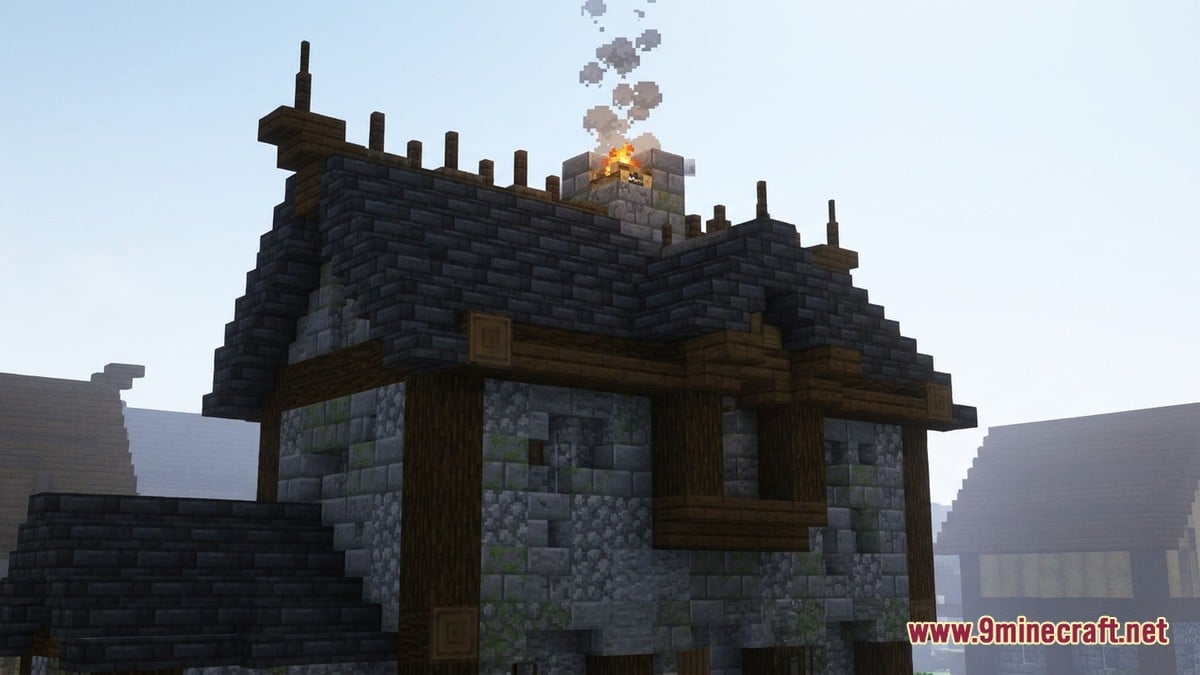
For players who prefer building block-by-block rather than pasting files, BuildingGuide outlines four core principles that separate flat boxes from convincing medieval architecture. Starting with a wider stone foundation grounds the build, while exposed spruce or dark oak log beams create high contrast against light plaster-style infill walls.
 Spruce LogUsed for exposed timber framing, frontier stockades, and bridge supports.
 Stone BricksPrimary foundation material, best mixed with cracked and mossy variants.
 Deepslate StairsCreates steep, overhanging old-world rooflines and dark tower crowns.
 CampfireTucked inside stone chimneys to produce realistic village smoke.
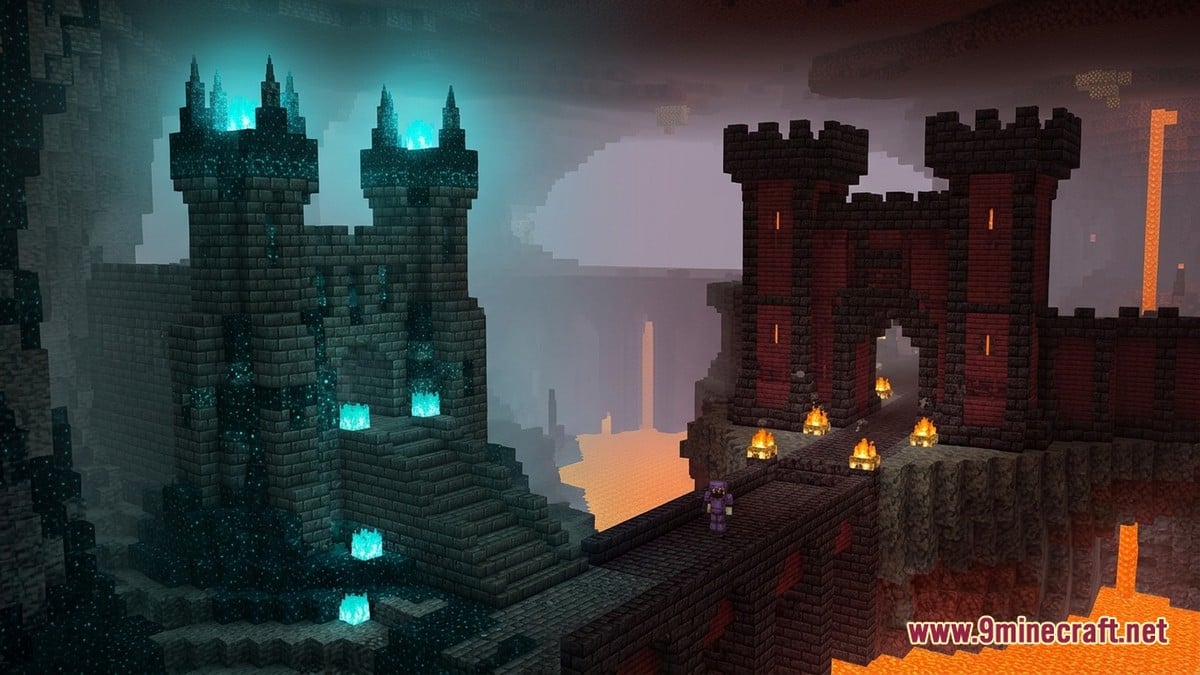
 BlackstoneUsed with crimson and warped wood for Nether border citadels.
 Dark PrismarineShapes the broad upturned roofs of eastern tenshu castle compounds.
Wall texturing prevents large fortresses from looking machine-made. BuildingGuide recommends blending standard stone bricks with cobblestone, andesite, and mossy variants, while tucking stairs and slabs directly into flat wall faces to simulate missing mortar and weathered stone. Steeply pitched roofs with dormers, fence-post finials, and jutting upper floors complete the asymmetrical silhouette typical of historical buildings.
Community Creations and Creator Spotlights
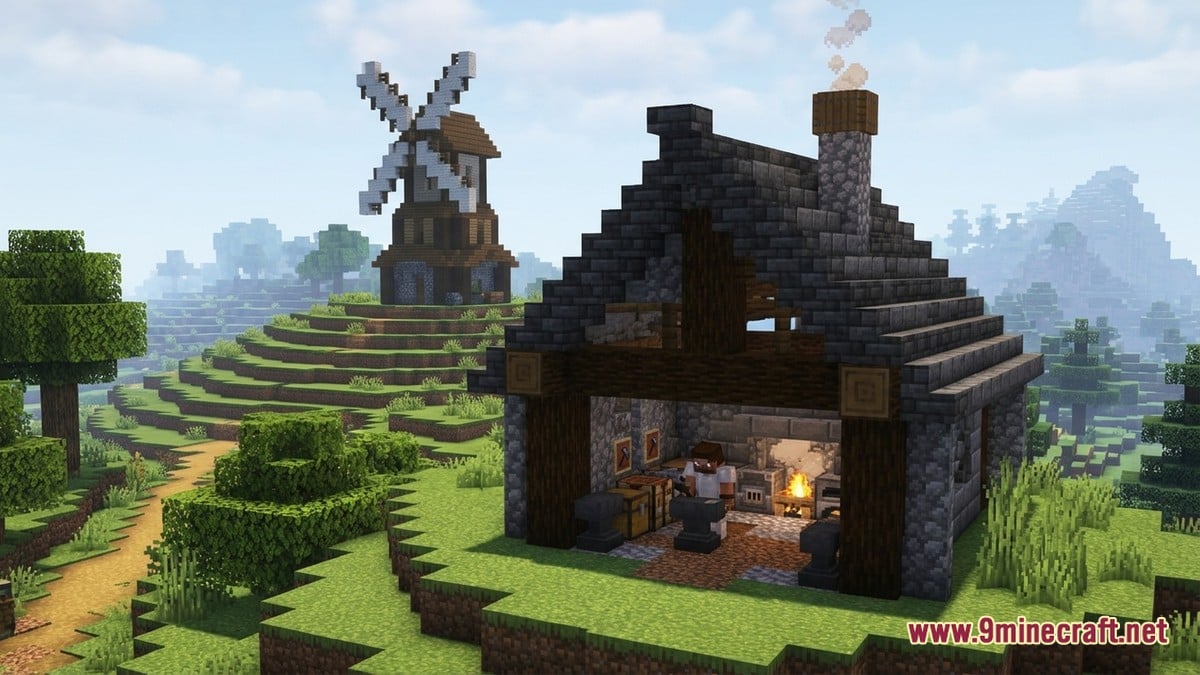
Across YouTube and community showcases, builders are focusing on structures that combine survival utility with roleplay detail. Sportskeeda highlighted seven standout builds, including a multi-wing Big Medieval Mansion and an Ultimate Medieval Survival Base with built-in mines and storage levels, both designed by YouTuber NeatCraft. For smaller footprints, KoalaBuilds created a working Medieval Blacksmith with a prominent stone chimney and anvil forge, while Lex The Builder put together a Simple Medieval House tailored for beginners.
Players discussing these tutorials frequently praise how functional interiors—such as rustic windmills with attached living towers or multi-room town shops—fit directly into Towny and roleplay servers. However, builders in the comments also point out a common hurdle with public schematics: many downloadable castles are purely decorative shells. Users often have to hollow out solid terrain, wire up their own redstone portcullises, or rebuild staircase connections that do not quite meet the upper walkways.
Modular Fortifications, Bridges, and Biome Variants
That tension between decorative scenes and survival-ready layouts is clearly documented in MyMinePilot's extensive schematic catalogue. The platform cautions builders to inspect layer guides closely, as several gatehouses, ruined border keeps, and concentric city walls feature static bars, non-functional winches, or disconnected wall-walks that require manual editing after placement.
| Category | Specific Build Examples | Key Architectural Features |
|---|---|---|
| River & Water Crossings | Birch/Oak Covered Bridges, U-Shaped Bastion, Canal Lock | Cobblestone river piers, 3-block bastion mouth, static miter gates, and towpath keeper hut |
| Modular Castle Defences | 24-Block Curtain Wall, 90-Degree Corner Bastion, Drum Keep | Three 8-block bays, machicolated galleries, murder holes, and 3 bar-front prison cells |
| Garrisons & Outposts | Garrison Barracks, Frontier Stockade, Snowy Gatehouse | 16-bed dormitory, stripped-spruce earth bank, and steep snow-shedding spruce roofs |
| Village Trade & Roleplay | Butcher, Chandler, Coach-Through Hall, Apiary Shed | Ice-door cool larder, hanging taper racks, ticket office, and 4-hive screened flower court |
| Biome & Cultural Variants | Deep Dark Castle, Blackstone Citadel, Tenshu, Inca Citadel | Sculk ritual courts, white-concrete base with dark-prismarine roofs, and Andean terraces |
Beyond traditional European stone keeps, schematic creators have adapted medieval techniques to specialized biomes and historical cultures. MyMinePilot lists desert garrisons built around recessed cisterns, angular coastal forts with lower powder magazines, and a Byzantine chapel with a shallow central dome and triple apses. For fantasy and adventure maps, builders have even assembled a gothic spider castle with eight articulated buttresses and a fang gate, alongside a Balinese-inspired five-bay timber meeting hall and a haunted village complete with a ruined bell chapel.
How do you prefer to build medieval towns and castles in Minecraft?
Tap an option to vote