Easy XP, Tree and Resource Farm Guides Trend for Minecraft Survival Worlds
New survival farm catalogues and updated XP guides are reshaping how Minecraft players level up, gather wood and automate bases across Java and Bedrock.
Minecraft News
A wave of step-by-step farm catalogues and updated survival guides has pushed compact XP grinders, tree harvesters and starter resource builds back to the top of community searches. Rather than spending days draining ocean monuments or digging perimeter trenches, players on Minecraft 1.21+ through Java 26.3 and Bedrock 26.52 are turning to low-cost potion setups, chest-scanning build apps and capped water channels that respect recent mob physics.
Why Guardian Orbs and Armadillo Potions Dominate XP Rates
Reaching level 30 at an enchanting table surrounded by 15 bookshelves (placed two blocks away with an air gap, without which tables cap at level 8) takes 1,395 XP points, according to howtoplayhub.com. Because every level past 30 demands progressively more points, spending levels right at 30 and repairing Mending gear quickly matters more than hoarding hundreds of levels. Crucially, mobs only drop experience when finished by a player or within 5 seconds (100 game ticks) of taking player damage.
Testing reported by champbop.com on Java 26.3 and Bedrock 26.52 highlights a hidden bottleneck: players can absorb only about 10 XP orbs per second. While an Enderman drops 5 XP split into small orbs, a Guardian drops 10 XP packed into just two large orbs worth 7 and 3. That density pushes Guardian setups to around 180,000 XP per hour alongside prismarine, sea lanterns and cod, and modern no-drain monument designs cut construction down to a couple of hours.
Once the End is unlocked, an Enderman farm built at Y=128 over the void—at least 43 blocks away from outer islands using an Endermite lure, as noted by minecraftbible.com, plus a carved pumpkin and a two-block-high kill window—still takes Java players from 0 to 30 in under a minute. For early Overworld progression, however, champbop.com points to the Infestation farm: brewing an Awkward Potion with a stone block yields a Potion of Infestation, giving hurt mobs a 10% chance to spawn 1 to 2 silverfish. Splash that onto an armadillo over a gentle, non-lethal damage source and you get roughly 30 XP per second for pennies on both Java and Bedrock.
Spawners, Passive Smelters and Nether Alternatives
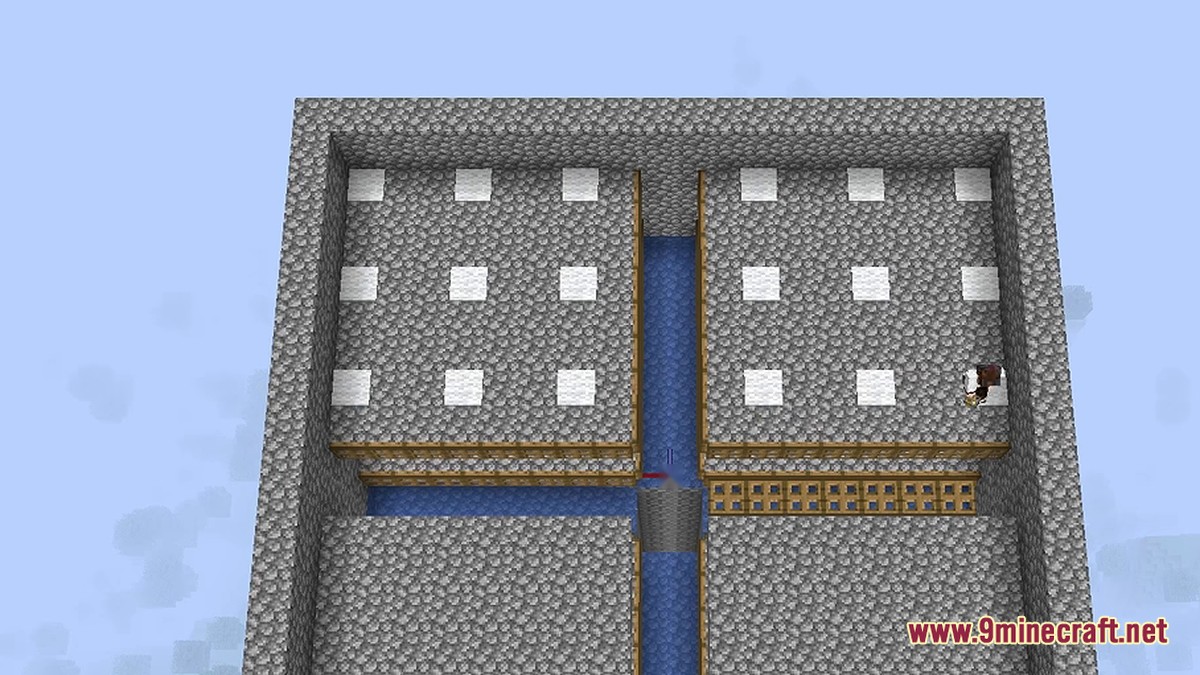
Classic underground monster rooms remain a staple if you stay within 16 blocks on non-Peaceful difficulty and drop 20-health zombies or skeletons about 22 blocks, leaving them at half a heart (champbop.com notes fall damage equals roughly distance minus three). However, howtoplayhub.com warns of a vital 1.21+ catch: mobs now tread water and breathe if any air pocket sits above a water stream, so builders must cap channels with solid blocks like mangrove leaves or slabs. Players without a spawner often stack 40×40 darkroom platforms 10 blocks apart with a 24-block drop shaft, keeping at least 24 to 128 blocks clear of competing cave spawns.

In the Nether, gold farms using zombified piglins—either via Overworld portal arrays or above the Nether roof at Y=128+ accessed with trapdoors—deliver 1,000 to 2,000 levels per hour, champbop.com and minecraftbible.com report. Fortress Blaze spawners drop 10 XP per kill plus fuel rods; since water evaporates in the Nether and blazes ignore fire, howtoplayhub.com and craftfinder.app recommend custom funnels paired with snowball dispensers, splash water potions or shielded melee slits. Craftfinder.app also flags treasure-room bastion magma cube chambers (which ignore standard torchlight), abandoned-mineshaft cave spider grinders, stronghold silverfish traps that avoid nearby stone blocks, and repeatable Trial Chambers for breeze rods and trial keys.
For zero-combat levels, howtoplayhub.com details pairing an automatic bamboo farm with cactus smelting, which banks 1.0 XP per cactus on Java—matching diamond ore and beating kelp's 0.2 XP rate. On multiplayer servers, locking furnaces with upward-facing hoppers stops neighbours from pulling output items and stealing stored XP. Players can also top up levels via villager trading halls (3–6 XP per trade across five career tiers), passive animal breeding (1–7 XP), or sculk catalysts that store mob XP inside sculk blocks until mined without Silk Touch.
| Farm Type | Stage & Dimension | Output / Rate | Edition & Build Notes |
|---|---|---|---|
| Guardian Farm | Late / Overworld Monument | Up to ~180,000 XP/hr (10 XP/kill) | Fastest overall; no-drain designs save hours |
| Enderman Farm | Late / The End (Y=128 void) | Level 0–30 in ~60s (5 XP/kill) | Cheap on Java; weak on Bedrock mob caps |
| Nether Gold Farm | Mid / Nether Roof or Portals | 1,000–2,000 levels/hr | Strong XP plus gold ingots and bartering fuel |
| Infestation (Silverfish) | Early / Overworld | ~30 XP/sec | Uses Potion of Infestation on an armadillo; works on both |
| Cactus + Bamboo Smelter | Any / Overworld Base | 1.0 XP per cactus (Java) | Passive XP bank; beat kelp's 0.2 XP rate |
Tree Farms, Resource Hubs and Step-by-Step Build Apps
Beyond levels, survival players are leaning on visual catalogues to automate wood and base supplies without breaking world aesthetics. Craftfinder.app tracks 35 major farm types with shopping-list estimates, led by tree farms for renewable logs, saplings, apples, sticks and charcoal, alongside iron farms (200+ ingots/hour using four villager pods around a kill pit), shared sugarcane and bamboo harvesters, moss bone-meal generators, lava dripstone arrays, slime chunks below Y=40, drowned trident traps, ghast tear catchers for dried ghasts and end crystals, wither cages, raid farms for Evoker totems, villager breeders placed 48+ blocks from claimed beds, and creeper platforms with 2-block ceilings that block spiders to yield 1,700 to 3,500+ gunpowder per hour.
Dedicated layout tools are smoothing out the construction process too. According to x-builds.tech, its free offline companion covers 19 Java 1.21 builds—ranging from a 538-block Compact Crop Farm up to a 9,205-block Mob Tower XP Farm, plus barns, greenhouses and windmills—complete with chest-content matching and unfinished-build reminders. Similarly, wbuilds.app organises chicken coops, barns, iron setups and crop plots by listing exact block totals upfront before walking through each layer.
 Oak SaplingCore input for renewable tree, stick, apple and charcoal farms
 StoneBrewed into Awkward Potions for early Infestation silverfish XP
 CactusBanks 1.0 XP per smelted block inside bamboo-fed furnaces
 Carved PumpkinWorn at Enderman void grinders to prevent aggro on eye contact
Java Edition Survival Farms
- Enderman void platforms and darkroom mob towers run at peak efficiency.
- Nether roof gold farms above Y=128 are freely buildable.
- Cactus smelting banks a full 1.0 XP per item.
Bedrock Edition Survival Farms
- Tighter mob-population caps weaken Enderman, spawner and darkroom tower rates.
- Guardian, Nether portal gold and Infestation armadillo farms are preferred.
- Blaze, spawner and furnace XP banks still operate reliably when built to Bedrock specs.
Community Reaction and How to Test Safely
Across technical showcases and tutorial discussions, creators and survival regulars strongly praise no-drain Guardian builds and armadillo Infestation grinders for sparing players weeks of tedious perimeter digging. At the same time, frustration persists among Bedrock players who follow Java-only darkroom or Enderman guides only to hit strict mob-cap walls, alongside builders caught off guard when unsealed 1.21+ water elevators let zombies bob happily at the ceiling instead of funneling to the drop chute.
If you want to try these farm mechanics on the latest Java Edition or Bedrock releases (including Android APK, iOS, Windows GDK or patched builds), you can grab them via our Android, iOS, Windows, patched and Java Edition download pages or consult the 9Minecraft wiki. Always back up your survival world before upgrading or testing redstone and potion contraptions, as version changes can alter mob pathfinding or break fragile hoppers.
Which XP or resource farm do you build first in a fresh Minecraft survival world?
Tap an option to vote