Seattle Public Schools Blocks Minecraft, YouTube and AI Tools Districtwide
Seattle Public Schools is restricting student access to Minecraft, YouTube, and unapproved AI tools while capping daily classroom screen time.
Minecraft News
Seattle Public Schools (SPS) has announced sweeping new restrictions on classroom technology, blocking student access to Minecraft, YouTube, and unapproved artificial intelligence tools. Unveiled during a November 4 school board meeting, the updated rules take effect on Monday, November 9, marking a major shift away from the relaxed digital habits adopted during the pandemic.
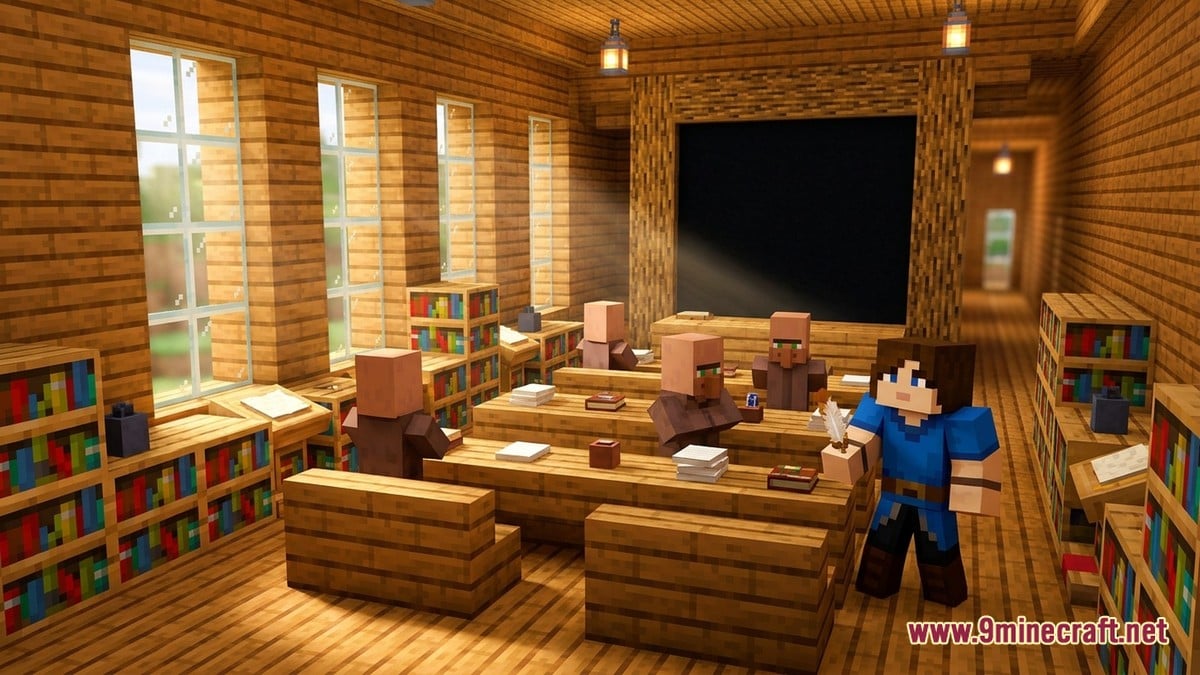
Under the updated rules reported by KOMO News and FOX 13 Seattle, Minecraft is now off-limits across every grade from kindergarten to 12th grade. The sole exception applies to rare classes where teachers actively use the game as part of an approved lesson plan. Assistant Superintendent of Academics Dr. Mike Starosky noted during the board meeting that unsupervised Minecraft play had become a major distraction, while Superintendent Ben Shuldiner invited parents to submit names of other video games they want blocked on school networks.
Screen Caps, Shared Computers, and Closed AI Loopholes
Alongside the game and video blocks, SPS is dismantling the one-to-one device setup inherited from remote learning. According to KUOW, Superintendent Shuldiner explained that schools rushed hardware into children's hands during the pandemic without evaluating the long-term effects. In September, the district stopped issuing personal iPads to kindergarten through second-grade pupils and limited their classroom screen use to 30 minutes a day.
Starting in January, third through fifth graders will also lose their individually assigned laptops. Instead, elementary classrooms will share computers, and grades 3–5 will face a 60-minute daily screen-time ceiling. KOMO News reported that state and district assessments will not count toward those daily limits, while existing web filters, ad blockers, and monitoring tools remain active. Starosky also stressed that tablets and laptops can no longer be handed out as rewards, incentives, or free-time treats, shifting focus back to books, paper writing, and hands-on projects.
| Grade Level | Daily Screen Limit | Assigned Devices | Blocked Services | Proposed AI Approach |
|---|---|---|---|---|
| Grades K–2 | 30 minutes | None (ended September) | Minecraft, YouTube, Gemini, Search AI | No classroom AI use |
| Grades 3–5 | 60 minutes (from January) | Shared classroom computers | Minecraft, YouTube, Gemini, Search AI | Introductory lessons on how AI works |
| Grades 6–8 | Under district review | District-monitored | Minecraft (non-curriculum), Gemini, Search AI | Teacher-guided checks on AI accuracy and bias |
| Grades 9–12 | No daily cap stated | District-monitored | Minecraft (non-curriculum), Gemini, Search AI | Testing arguments and getting draft feedback |
Artificial intelligence sits at the centre of the policy overhaul. KUOW noted that Google Gemini was previously blocked only for kindergarten through second grade, until staff discovered students using a technical workaround to chat with the bot. Officials have now patched that loophole and banned Gemini, Google Search AI summaries, and other unapproved generative tools across all K–12 grades, as reported by Superpower Daily and KPTV.
Approved AI Software Sparks Pushback
Blocking Gemini does not mean SPS is abandoning artificial intelligence altogether. Digital learning manager Debra Knickerbocker told the board that the district has purchased and approved MagicSchool AI and Microsoft Copilot to support student thinking, alongside a graded AI-literacy plan starting in third grade. By sixth grade, teachers could guide pupils through exercises spotting AI errors and bias, while high schoolers might use approved tools to test arguments or review essay drafts.
No evidence was presented showing that tools like MagicSchool AI have raised reading scores, leaving the district without proof that the software actually improves learning.
Evan Briggs, Seattle School Board Director (via KUOW)
Even within the school board, that plan faced sharp questioning. Board Director Evan Briggs pointed out that staff had zero data showing MagicSchool AI improved reading scores, while Starosky admitted that high schoolers themselves had voiced fears about suffering cognitive decline from relying on bots. Meanwhile, Board Director Liza Rankin told KOMO News that the board and parents share the goal of helping children develop critical thinking before leaning on digital tools.
SPS ends individual iPads for grades K–2 and caps daily classroom screen time at 30 minutes.
Parents rally outside headquarters as the board announces wider game, video, and AI bans.
Districtwide blocks begin for Minecraft (K–12), YouTube (K–5), Google Gemini, and Search AI summaries.
Grades 3–5 transition from personal laptops to shared computers with a 60-minute daily screen cap.
Community Reaction and Parent Demands
Outside district headquarters, local advocacy group Seattle Families for Intentional Tech (SFIT) rallied before the vote, arguing the new blocks do not go far enough on generative AI. Parents like Ashley Worobec, Danica Novle, and Andrew and Erica Shutes-David told Yahoo News, KPTV, and KUOW that classroom chatbots risk feeding children misinformation, harvesting student data for commercial profiling, and replacing genuine creative effort with instant machine outputs.
Across wider community discussions, educators and players have shown mixed but pragmatic reactions to Minecraft being swept into the crackdown. Many commenters understand why schools block unsupervised gaming during lessons, noting that students routinelysneak onto unblocked web ports or education clients when they should be working, yet players also point out that keeping the curriculum exemption is vital so genuine building and coding classes are not punished alongside classroom slackers.
Looking ahead, SFIT has presented the board with six formal demands, including an immediate pause on student-facing generative AI, a caregiver-and-teacher Ed-Tech Advisory Committee relying on peer-reviewed studies, annual app and privacy lists, yearly opt-in data consent following August 2025 FTC COPPA guidance, paper-based opt-outs, and ergonomic and eye-safety rules. For students hoping to play Minecraft at home outside school networks, Bedrock builds (Android APK, iOS, Windows GDK, and patched versions) can be found via our Android, iOS, Windows, patched and Java Edition download pages, while Java Edition details are available on the 9Minecraft wiki.
How should schools handle Minecraft on classroom computers?
Tap an option to vote