Minecraft Bedrock Horror Add-Ons Compared: Best Stalkers and Tormentors
From silent watchers to base-wrecking monsters, here is how the scariest horror add-ons for Minecraft Bedrock 1.26+ compare in survival.
Minecraft News
Survival horror packs updated for Minecraft Bedrock 1.26+ have moved well past simple jump scares, splitting instead into slow-burn psychological stalkers and relentless base-breakers. Recent roundups from the CurseForge Blog and MCPE Central highlight nearly two dozen entity packs, biome overhauls, and world infections that test player nerves in completely different ways.
Silent Watchers and Sight-Line Stalkers
Not every threat needs to swing at your health bar to ruin a mining trip. The CurseForge Blog points to a minimalist watcher add-on whose mysterious entity never speaks or attacks, choosing only to stand at a distance and stare until you move on. Another survival-focused pack turns routine caving and low-health recoveries personal with phantom footsteps, whispers, and timed scare events, complete with a Stalker Radio item that counts both your scares and days survived.
Eye contact is the central rule across several standout packs. CurseForge's lineup includes a short-film-inspired hunter that observes from afar before sprinting whenever you turn your back, alongside an SCP containment pack pairing SCP-173—which moves only while unseen—with SCP-096, which turns unstoppable the moment you glimpse it. MCPE Central notes a similar mechanic in The Mimicer, a giant spider-like Steve parasite in caves that works much like the Pale Garden's Creaking, charging far faster whenever you look away from its eyes until you kill it.
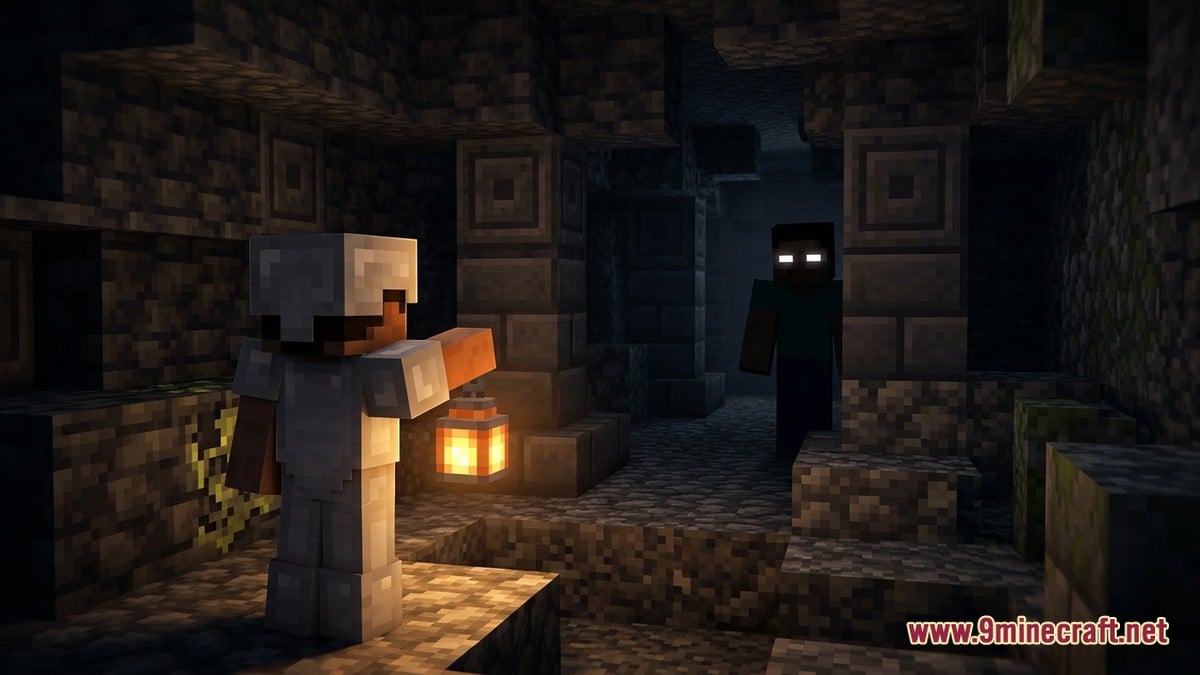
Underground paranoia also drives Cave Dweller Reimagined, which MCPE Central credits with sharper monster AI that quietly studies miners long before they realise it is in the tunnel. Above ground, From The Fog brings Herobrine into survival as an active saboteur that follows players, builds pyramid structures, breaks torches, snuffs out candles, and leaves cryptic text behind—going as far as burning down bases and triggering intentional client crashes.
Psychological Stalkers
- Rely on distant staring, whispers, footsteps, and screen glitches
- Punish players for breaking or making eye contact
- Preserve world blocks in most passive watcher packs
Active Tormentors
- Chew through doors, crawl into tight gaps, or ambush inside houses
- Escalate aggression after sleep cycles or failed timed tasks
- Can kill tamed pets, torch builds, or spread flesh across biomes
Home Invaders and Relentless Tormentors
Locking your front door does very little against the heavier hitters on this list. The CurseForge Blog highlights a nighttime home-invasion add-on that blends hiding and surveillance mechanics, placing monsters outside your doorway or already inside your rooms so opening the wrong door proves fatal. MCPE Central likewise warns against a complex-AI night stalker that creeps closer when ignored, chews straight through windows and doors, and deals 6 to 7 hearts of damage per strike if you look at it.
Several creatures punish long-term survival habits directly. According to MCPE Central, Anomaly spawns in caves and at night as a haunted Steve with a worse second form; it stays passive until first viewed, grows more hostile every time you sleep, and actively slaughters your pets. TheBoiledOne stalks with eerie noises and tentacles before spitting boiling water and causing harmless monitor-style glitches as it vanishes, while Apollyon disguises itself inside a grim structure as a half-dead villager before morphing into a grinning, clawed beast that points at and hunts only one player at a time.
Size and persistence define the rest of the roster. The Irritator squeezes its huge, loud frame into tiny spaces at night, though MCPE Central found a roomy safe house keeps it from landing hits, whereas Siren Head stalks nighttime forests with thunderous footsteps and can be outsmarted by building a tower taller than its head. For co-op groups, the CurseForge Blog recommends The Creepy Horse, which replaces simple chases with escalating phases, timed objectives, and shared multiplayer penalties.
| Add-On / Theme | Primary Mechanic | Key Threat or Counterplay |
|---|---|---|
| From The Fog | Close and distant stalking | Extinguishes lights, places pyramids, burns bases |
| The Mimicer | Creaking-style sight rule | Sprints when unseen; must be killed to escape |
| Night Door-Breaker | Stalking and siege AI | Eats doors/windows; deals 6–7 hearts per hit |
| Anomaly | Sleep-scaled aggression | Ignores you until seen; targets tamed pets |
| The Creepy Horse | Timed multiplayer tasks | Escalating stages with shared group consequences |
| Siren Head & Irritator | Nighttime ambushes | Countered by tall towers or spacious safe rooms |
World Infections, Horror Structures, and Boss Fights
Players who want the landscape itself to turn hostile have several broader packs to test. The CurseForge Blog features a Vita Carnis analog-horror pack populated by spreading Crawl, growing Mimics, a giant Monolith, and the Singularity, alongside an early-beta flesh outbreak whose infected mobs, warped trees, and tumour nests permanently overwrite blocks unless contained.
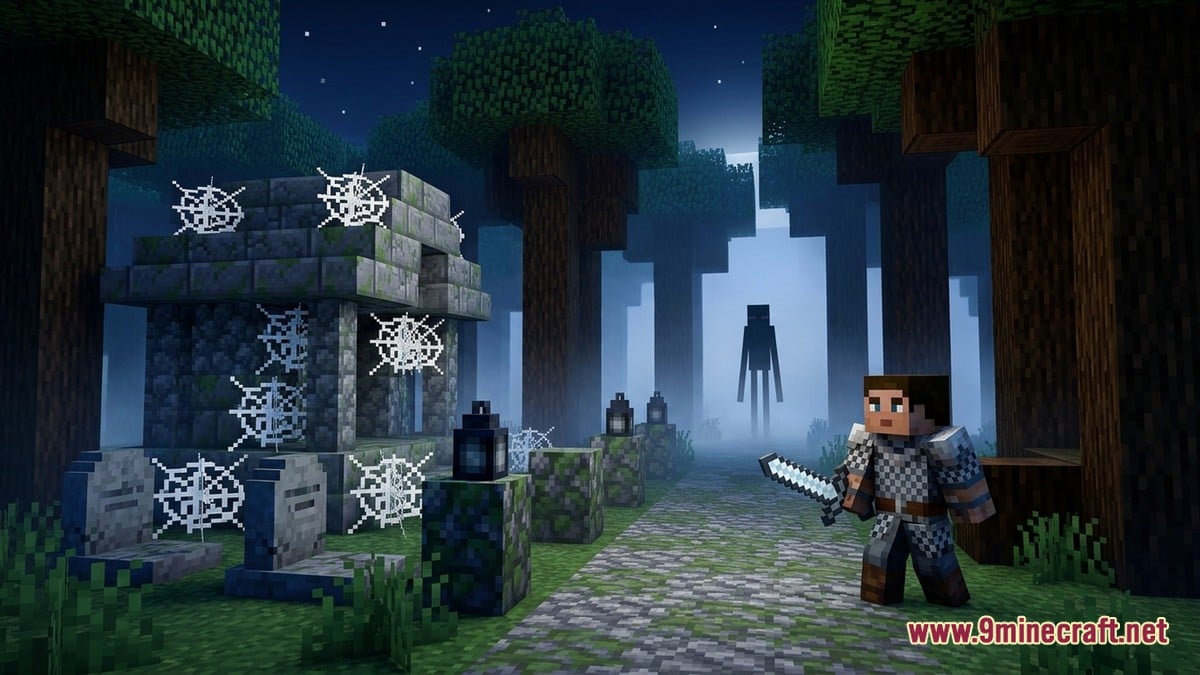
Mapmakers and explorers also get calmer or more combat-heavy alternatives. CurseForge highlights a Backrooms sandbox kit stocked with custom blocks, mould zombies, mimics, and titans, plus a Venom and Carnage pack built around animated boss fights. Meanwhile, MCPE Central praises The Graveyard for scattering biome tree ruins, safe cobwebbed cemeteries, secret-filled haunted houses, a floating ocean Lich prison, and a trapped Crypt labyrinth full of loot across survival worlds.
What Playtesters and Players Think
Across creator playtests and community discussions, slow-burn tension and smart AI consistently earn higher praise than pure loudness. Playtesters enjoy discovering practical survival loopholes—such as towering above Siren Head or waiting out The Irritator in a wide bunker—and co-op groups welcome objective-driven scares that keep everyone involved.
Criticism mostly centres on griefing mechanics that punish long-term builders. Players frequently push back against packs that burn down bases, force deliberate game crashes, kill tamed wolves and cats, or permanently corrupt terrain during beta testing, preferring to run destructive add-ons on disposable worlds rather than main survival saves.
How to Try These Add-Ons Safely
You can get horror add-ons and compatible Minecraft Bedrock builds—including Android APK, iOS, Windows GDK, and patched builds—from our Android, iOS, Windows and patched download pages. Before loading in, verify that each pack matches version 1.26+, turn on any required experimental toggles in your world settings, and always test block-altering or crash-heavy packs on a backed-up copy of your save.
Why is my screen glitching when fighting TheBoiledOne?
Your monitor is fine. The visual distortion is a built-in effect signalling that the entity is about to disappear.
Which horror add-ons are dangerous for existing survival bases?
From The Fog can burn structures down, door-eating night stalkers break into houses, Anomaly kills pets, and early-beta flesh infection packs permanently replace world blocks.
Are there horror packs focused on exploration or combat instead of stalking?
Yes. The Graveyard adds crypts, haunted houses, and a Lich prison to loot, Backrooms packs offer mapmaking blocks and mobs, and Venom and Carnage focuses on boss-style fights.
Which style of horror add-on do you prefer in Minecraft Bedrock?
Tap an option to vote