Deepest Ravine in Minecraft Java 1.21.1 Sets New 110-Block World Record
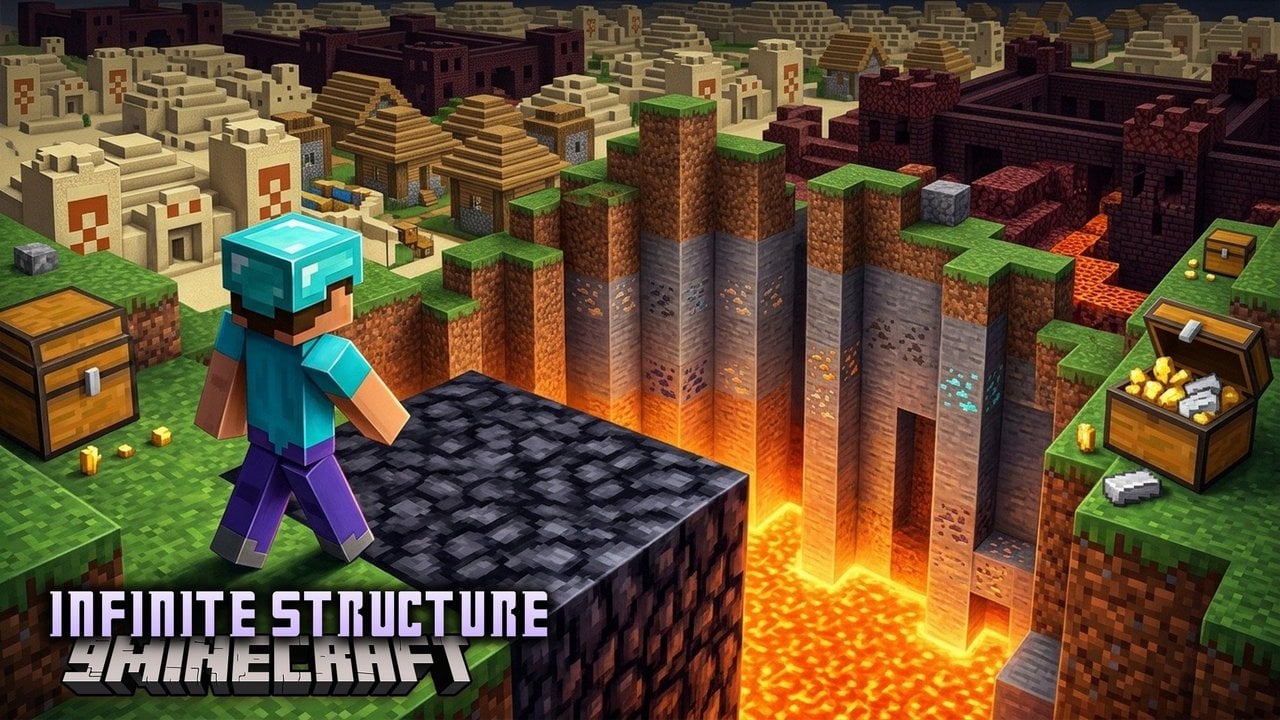
Seed hunters have uncovered a 110-block-tall ravine in Minecraft 1.21.1, nearly doubling the typical maximum canyon depth.
 9Minecraft Team
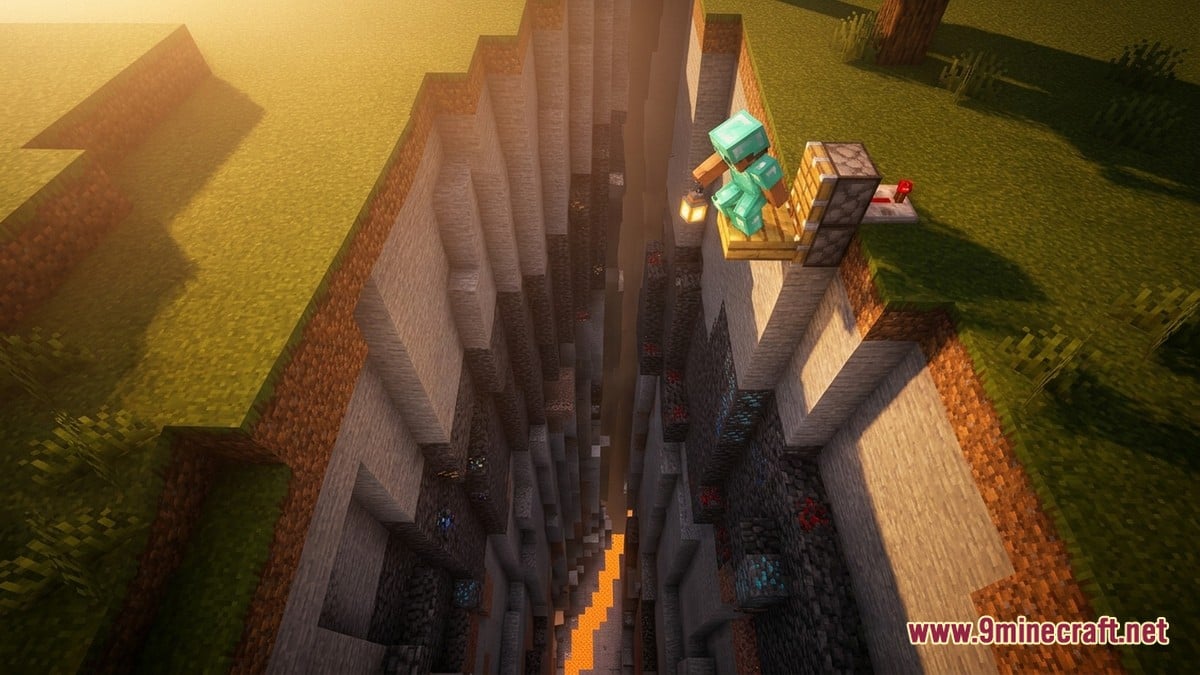
Players exploring the Overworld in Minecraft 1.21.1 have documented a new community record for the deepest ravine, measuring an extraordinary 110 blocks tall. Because standard canyons rarely plunge deeper than 62 blocks in Java Edition, this vertical drop represents a massive anomaly in the terrain carver.
According to technical documentation on theminecraftwiki.com, a ravine—formally known in the game files as a canyon—is a long, narrow crack that slices through the Overworld. While most generate purely underground between Y-levels 10 and 72, the largest examples breach the surface or cut straight into ocean floors, creating dramatic vertical chasms.
How the 110-Block Drop Compares to Normal Generation
To understand why a 110-block drop stands out, it helps to examine the mathematical boundaries of the vanilla canyon carver. Data from theminecraftwiki.com shows that an average canyon stretches between 85 and 127 blocks in length while remaining narrower than 15 blocks across.
Depth varies significantly depending on which version of the game you run. In Java Edition, the vertical drop normally stays within a strict 27 to 62 block window, whereas Bedrock Edition canyons can occasionally slice all the way down to the bedrock floor, looking even taller when they spawn inside mountainous biomes or Amplified worlds.
- Typical Max Width15 blocks
- Java Min Depth27 blocks
- Java Typical Max Depth62 blocks
- 1.21.1 Depth Record110 blocks
- Typical Max Length127 blocks
Why You Cannot Use /locate to Find Record Ravines
Hunting for extreme fissures requires external tools because the game treats canyons as carved terrain rather than generated structures. As mcseedmaps.com explains, typing /locate in chat will never point you toward a ravine, forcing seed hunters to rely on external map viewers that simulate the vanilla canyon carver chunk by chunk.
Because Java and Bedrock use separate carving algorithms, a ravine coordinate found on one platform will not appear in the same spot on the other. According to testing by mcseedmaps.com, external Java canyon finders reproduce the carved stone shape with 97% accuracy, though only about 60% of predicted surface openings actually break through the top dirt or stone layer in the live game.
For players who want to test 1.21.1 seeds or verify record-breaking terrain themselves, both editions are accessible directly through our Android download page. Bedrock Edition players can grab the Android APK, iOS, Windows GDK, or patched builds, while Java Edition players can download the client via the 9Minecraft wiki—just remember to back up your existing survival worlds before loading experimental seeds.
Java Edition Ravines
- Standard depth ranges from 27 to 62 blocks.
- Supported by external chunk-by-chunk canyon carver finders.
- About 6 in 10 predicted long surface openings actually breach the surface.
Bedrock Edition Ravines
- Can cut from mountain surfaces all the way down to bedrock.
- Uses a different carver algorithm, placing canyons at completely different coordinates.
- Not supported by Java-based canyon prediction tools.
Survival Value and Underground Hazards
Beyond holding a community title, an oversized ravine serves as an immediate shortcut for survival progression. The team at seeds.gg notes that deep cracks expose lower stone layers across massive wall surfaces, letting miners spot diamond ore, redstone, and lapis lazuli without digging a manual staircase.
That verticality also introduces serious hazards and strange terrain interactions documented by theminecraftwiki.com. When a canyon carves down to Y-level -55, all air blocks below that altitude are replaced by lava oceans, and water springs pouring down from upper aquifers or intersecting seas frequently turn the floor into obsidian.
 Diamond OreExposed along lower canyon walls near deepslate levels.
 Redstone OreFrequently visible on deep ravine ledges.
 Lapis Lazuli OreEasy to spot while descending open fissures.
 ObsidianForms at the bottom where wall springs hit Y -55 lava lakes.
 Water BucketRecommended by seeds.gg for descending 100+ block drops safely.
Canyons also interact dynamically with surrounding biomes and structures. A fissure can slice right through dungeons, caves, and abandoned mineshafts, may spawn slimes in its lower reaches, and will automatically fill itself with solid stone directly underneath if it crosses a river, frozen river, or swamp.
Community Reaction and How Minecraft Records Are Verified
Across YouTube and seed-hunting forums, players and creators have greeted the 110-block discovery in 1.21.1 with a mix of awe and technical curiosity. Many builders view the massive vertical wall space as an ideal natural frame for multi-level cliffside bases, while survival commenters joke about the lethal fall damage awaiting anyone who steps into the top ledge without a water bucket.
At the same time, veteran seed analysts have raised fair criticisms about how terrain records are measured. Commenters frequently point out that stacking a ravine inside an irregular mountain slope or overlapping a deep cave system can blur the line between where the canyon carver ends and where a standard cavern begins, leading to lively debate over what qualifies as a single continuous ravine.
According to a comprehensive world record roundup by minecraft.pl, niche seed and terrain discoveries like this rely entirely on community verification through shared seeds, video recordings, and downloadable worlds. Unlike speedruns—which require strict unmodded clients reviewed by speedrun.com moderators—or official Guinness endurance milestones like 35+ hours of continuous play, terrain and technical feats are openly peer-reviewed by players testing the coordinates themselves.
With minecraft.pl noting that the game has surpassed 425 million copies sold and 20 million YouTube subscribers by 2026, competition in classic categories like the 320-block build height limit or 12.5-million-block walks to the Far Lands is tougher than ever. Focusing on specific seed anomalies in patches like 1.21.1 remains one of the most accessible ways for everyday explorers to claim a world record of their own.
What would you do first if you found a 110-block-deep ravine in your survival world?
Tap an option to vote