Minecraft Redstone Guide: Early TNT Dupers, Minecart Traps, and Block Updates
From compact 20-block TNT dupers to observer-based block update traps, here is how modern Minecraft redstone bends game mechanics.
 9Minecraft Team
Modern Minecraft engineering goes far beyond basic wiring, relying on precise tick timing, block-state updates, and physics quirks to automate survival worlds. Recent technical breakdowns from g-portal.com, bloxelizer.com, freebuilders.org, and gamertagmythras.com highlight how players combine TNT minecarts, early-game TNT dupers, and observer update detection—such as leafstone and crop monitoring—to build everything from automated quarries to hidden base defences.
Early-Game TNT Dupers and TNT Minecart Bombers
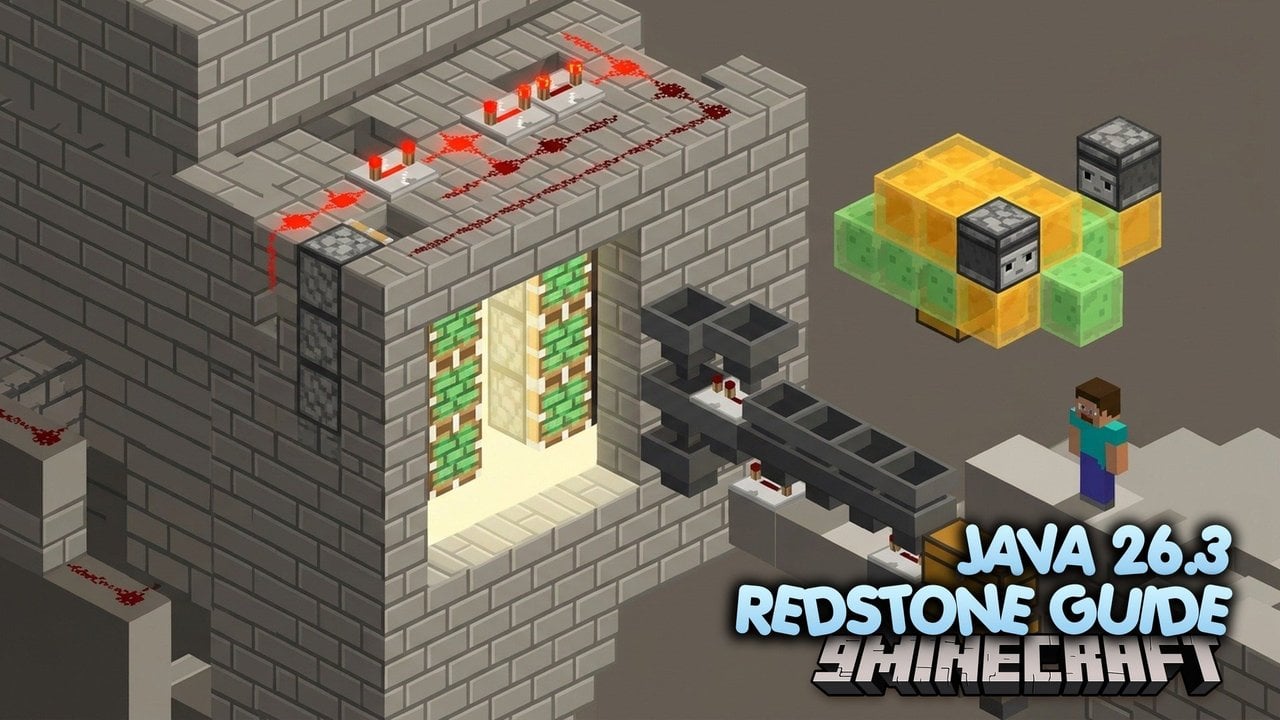
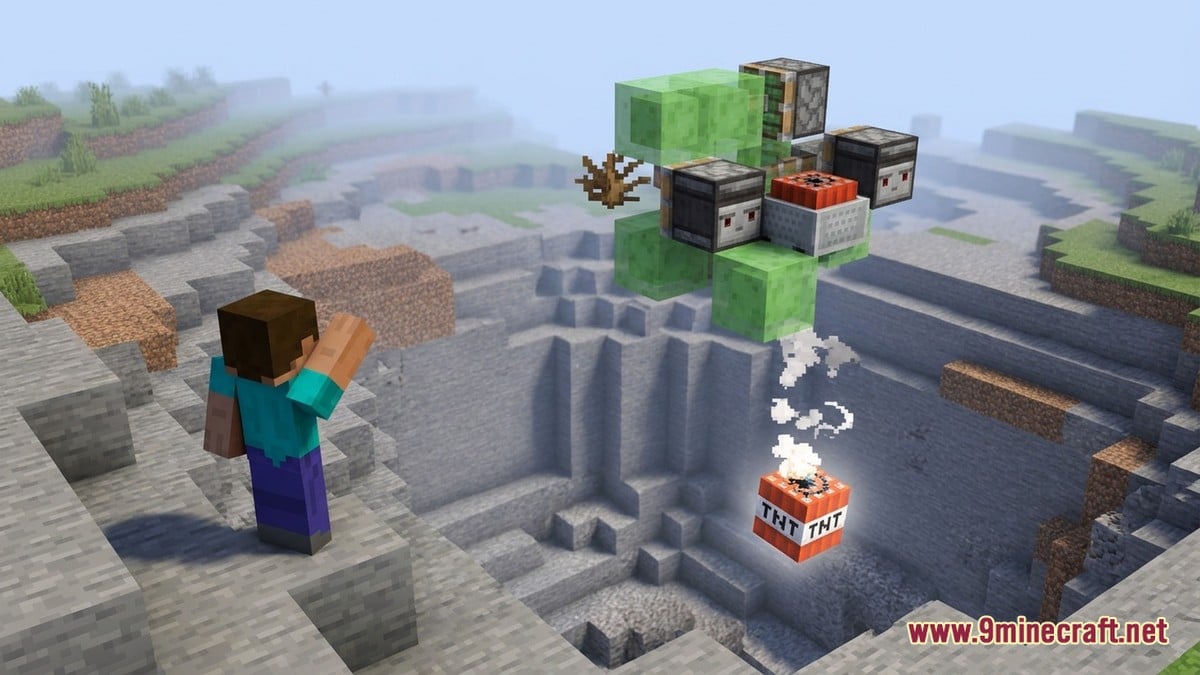
For large-scale excavation and perimeter clearing, hand-mining is quickly replaced by automated explosives. As g-portal.com explains, a TNT duper combines slime blocks, coral fans, and a minecart with TNT to produce an endless stream of lit TNT without spending extra resources. When attached to a self-propelling flying machine built from pistons and observers, the rig becomes a moving bomber that sweeps across an area.
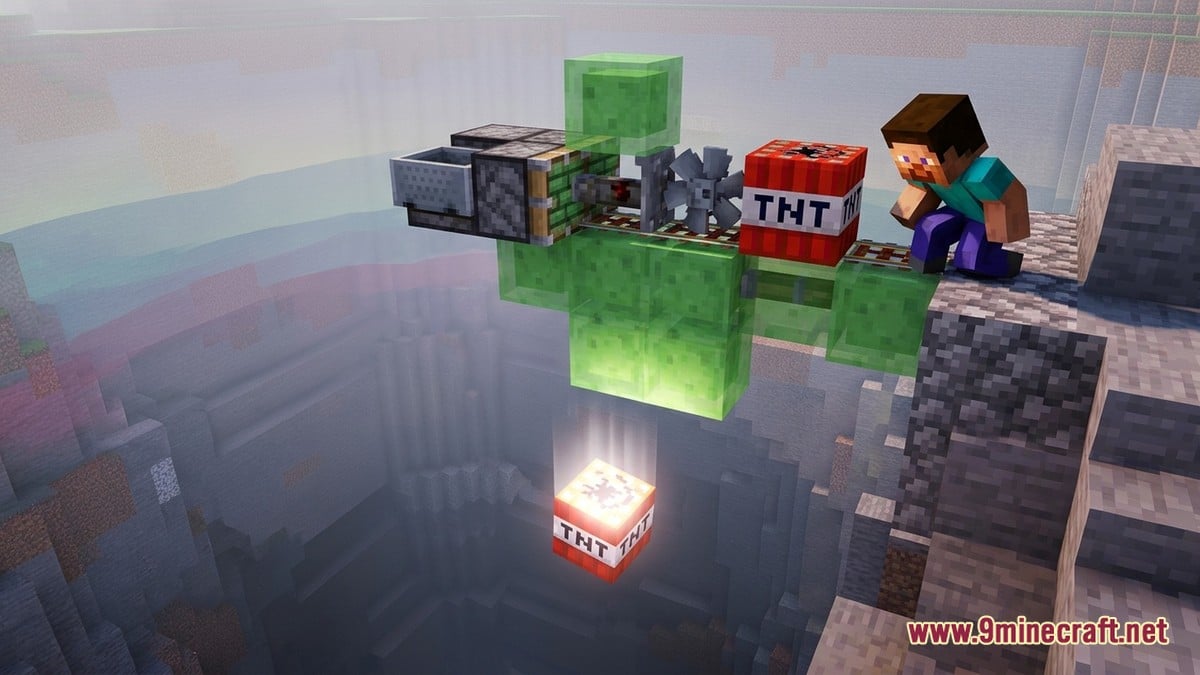
Getting one of these machines running early in a world requires minimal materials. According to schematic data on bloxelizer.com for a build published by creator Joey101610 (designed for Java Edition 1.13 and later), a functional rig takes just 20 blocks in total, led by 9 slime blocks, 3 stone, and 2 observers. Players can test these setups by loading ".litematic" files via Litematica or ".schem" files with WorldEdit on Java, or by importing ".mcstructure" files into a structure block on Bedrock—and if you need the latest game builds to test them, you can grab the Bedrock Android APK, iOS, or Windows GDK files from our Android, iOS, Windows and Java Edition download pages, or check the 9Minecraft wiki for Java Edition.
If you prefer not to use duplication glitches—or play on a multiplayer server that disables them—gamertagmythras.com notes that standard TNT cannons and quarry machines can be built using a dispenser loaded with TNT and triggered by a button or clock. Redstone-ignited TNT shares the exact same fuse duration as hand-lit charges, though builders must carefully manage the recoil block and propellant charges far away from their main base.
Flying Machines, Piston Limits, and Block Update Sensors
Moving a TNT duper or an automated platform across the map relies on the interaction between slime blocks and honey blocks (introduced in Minecraft 1.15 in December 2019). As detailed by gamertagmythras.com, both blocks pull adjacent blocks along when moved by a piston, but honey blocks do not stick to slime blocks. Builders use this rule to construct two sticky-piston engines that leapfrog each other one block at a time as observers detect the movement, keeping each half under the hard 12-block piston push limit so the machine does not stall.
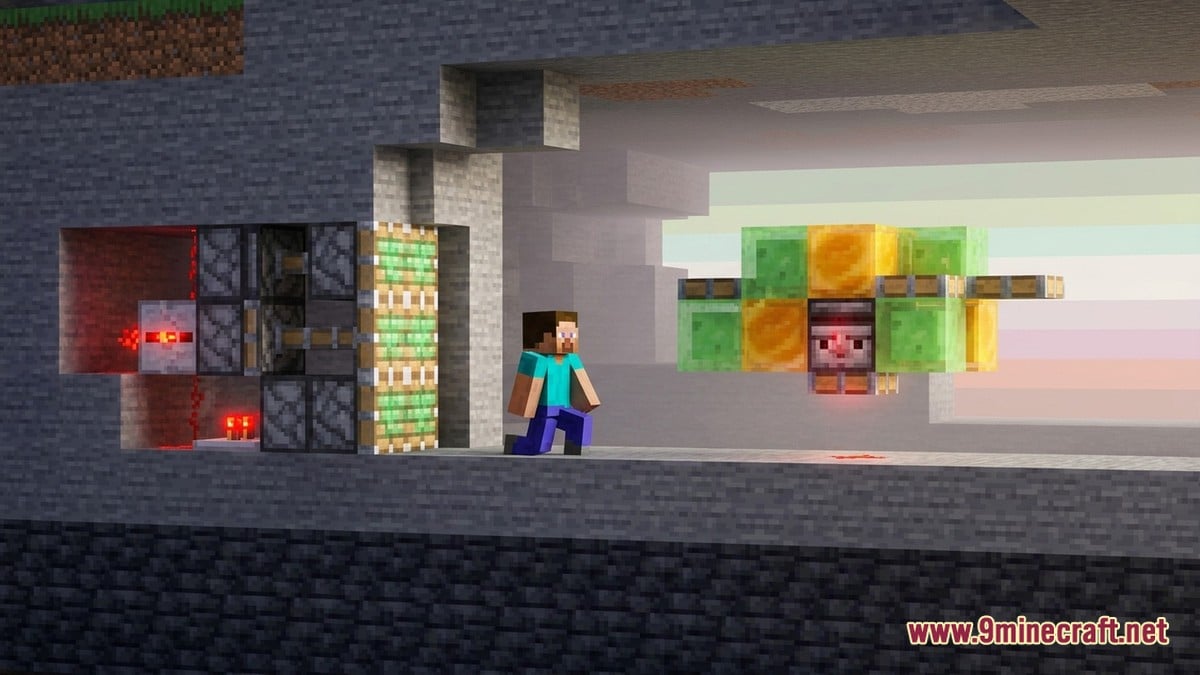
That same non-stick mechanic powers hidden entrances like the Jeb door and flush 2x1 or 2x2 piston doors, allowing a sticky piston to pull a facade block sideways out of sight without dragging the adjacent wall along. To trigger these doors or run automated farms without causing server lag, gamertagmythras.com recommends replacing constantly ticking redstone clocks with observers. Because an observer outputs a pulse the instant a block state changes—whether a crop reaches full growth or a connected leaf block updates its distance state in leafstone wiring—the circuit only fires on demand.
 TNT MinecartCore component in rail traps and coral-fan TNT dupers.
 ObserverDetects block state changes like crop growth or leaf updates.
 Honey BlockSlows walking mobs and moves blocks without sticking to slime.
 Slime BlockTransmits piston movement and bounces entities in flying rigs.
 ComparatorReads hopper inventory fullness to power automatic item sorters.
 Sticky PistonPushes and pulls up to 12 connected blocks per activation.
Java vs. Bedrock Edition: Why Builds Break
One of the biggest frustrations for redstone builders is copying a tutorial block-for-block only to watch it fail. Both freebuilders.org and gamertagmythras.com point out that Java Edition and Bedrock Edition handle tick timing and block updates very differently. The centerpiece of this split is quasi-connectivity (QC) in Java Edition, where a piston can be powered by a redstone signal in the block diagonally above and to the side of it, even without a direct adjacent connection.
Java Edition Redstone
- Supports quasi-connectivity (QC), allowing diagonal overhead piston powering.
- Enables classic BUD (Block Update Detector) switches using QC quirks.
- Precise, deterministic tick timing allows reliable TNT dupers and physics exploits.
Bedrock Edition Redstone
- No quasi-connectivity; pistons require directly adjacent redstone power.
- Stricter update rules make many Java duplication and teleport glitches impossible.
- Uses ".mcstructure" and structure blocks for importing community schematics.
Community and Creator Perspectives
Across the technical community, creators and players remain divided on where clever engineering ends and game-breaking exploits begin. As freebuilders.org notes, prominent technical creators like ilmango, Rays Works, and LogicalGeekBoy have spent thousands of hours designing machines that bend game rules—from infinite loops to bedrock-breaking contraptions—often finding new workarounds every time Mojang patches an older quirk.
While single-player builders praise TNT dupers as essential tools that prevent hours of repetitive sand and gunpowder grinding, server administrators and survival purists voice valid criticism. Many multiplayer servers ban duplication machines and chunk loaders outright because unmonitored flying machines and fast hopper-clock loops generate severe tick lag or grief terrain. Tutorial writers on gamertagmythras.com also echo player frustration with creators who upload Java-exclusive contraptions without labelling them, leaving Bedrock players stuck troubleshooting designs that rely on invisible QC wiring.
How do you feel about using TNT dupers in Survival Minecraft?
Tap an option to vote
Practical Base Traps, Mob Farms, and Item Sorters
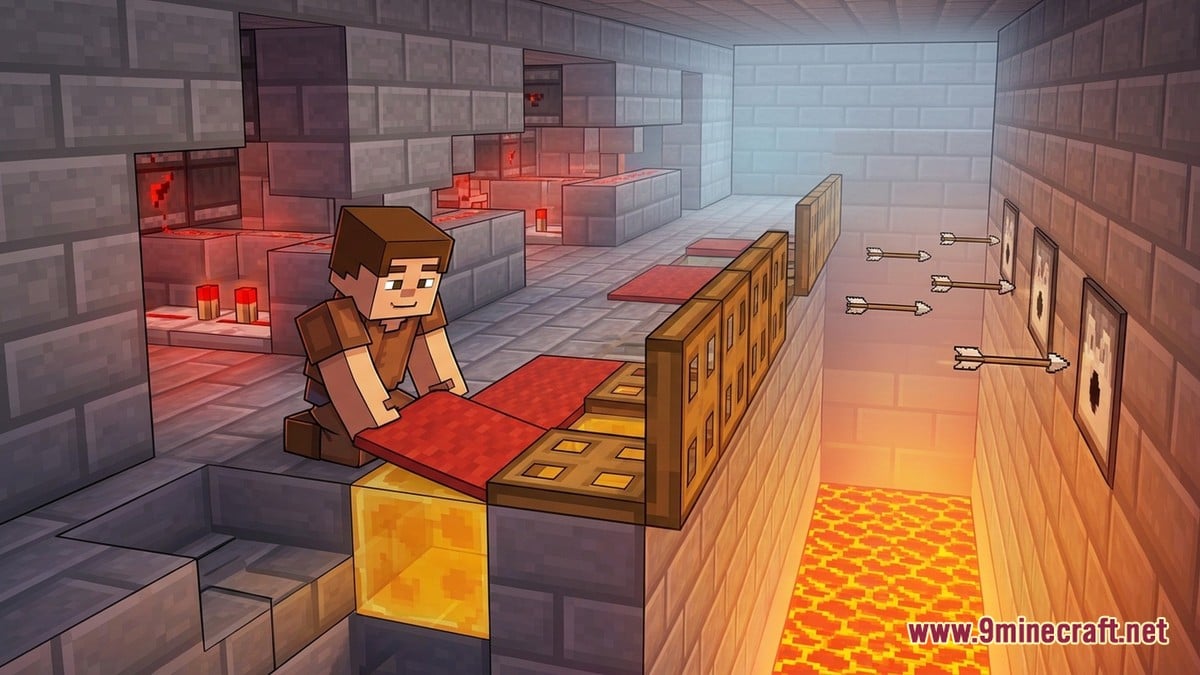
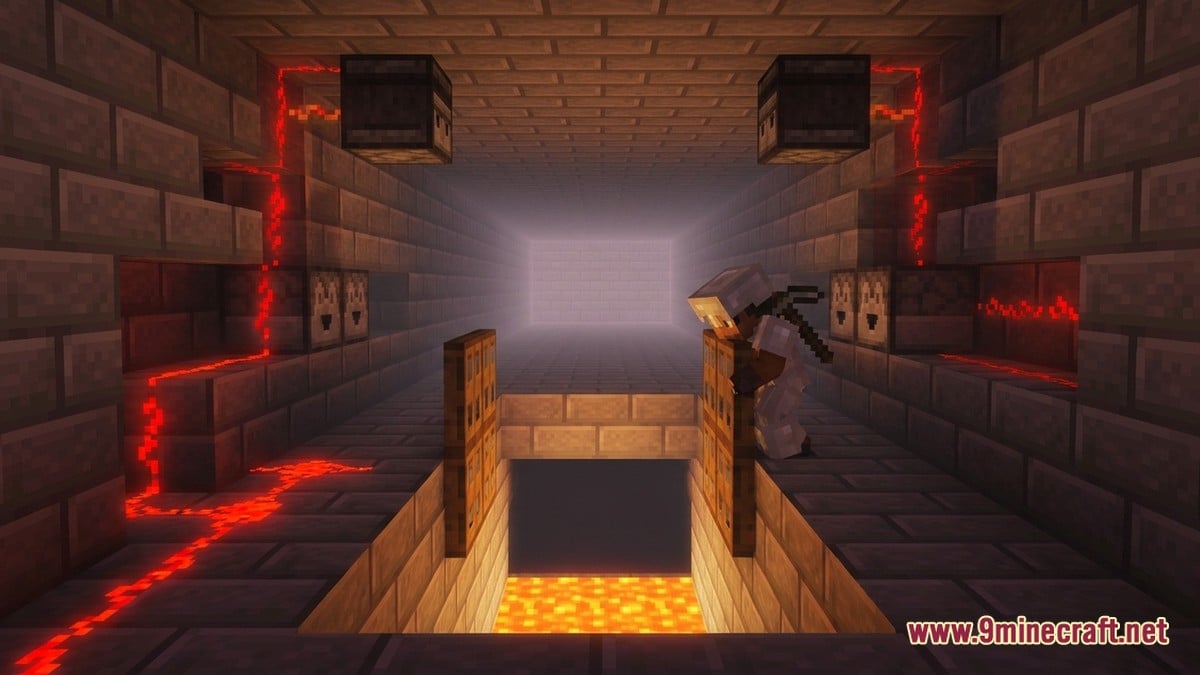
For players who want practical survival utility without risking server bans, g-portal.com breaks down how every trap follows a three-part formula: a trigger (such as a pressure plate or tripwire), a mechanism (pistons or dispensers), and a result. Simple one-time traps place TNT beneath sand, gravel, or carpet topped with a pressure plate, while reusable base defences pair honey blocks (which slow walking intruders) with arrow dispensers or sticky pistons that pull the floor away over magma blocks, campfires, or water.
- Trapdoor Pathfinding: Mobs treat open trapdoors as full solid blocks and walk right off the edge into pitfalls, making them ideal for hiding ladders, one-way doors, and drop chutes.
- Villager Baiting: Enclosing a villager behind fences or glass lures zombies into surrounding pits for easy XP farming, whereas lava traps destroy dropped items and should only be used for pure defence.
- Music Disc Farming: Trapping a creeper in a fenced pen so a skeleton's arrow delivers the killing blow yields most music discs (though newer tracks like Disc 5 must still be looted from Bastion Remnants or Ancient Cities).
- Natural Skeleton Traps: Approaching within 10 blocks of a thunderstorm-spawned skeleton horse triggers lightning and spawns four skeleton horsemen with enchanted iron helmets and bows; this scales with regional difficulty and cannot be forced with a Channeling Trident.
- Automatic Item Sorters: By linking a row of hoppers to comparators and repeaters pre-loaded with filter items, loot from these mob traps is automatically filed into dedicated chests, sending unmatched items to an overflow chest.
Can you get banned for using TNT dupers or redstone glitches?
Never in single-player worlds, as nobody moderates local saves (just back up your world in case a machine causes lag or crashes). On multiplayer servers, always check the rules first, as many administrators ban dupers to prevent lag.
What is the safest way to build a redstone clock without lagging my world?
Avoid leaving free-running repeater loops or two observers facing each other active 24/7. Instead, use a single observer pointed at a crop or block update line so the circuit only pulses when needed, or use a hopper clock for slower intervals.